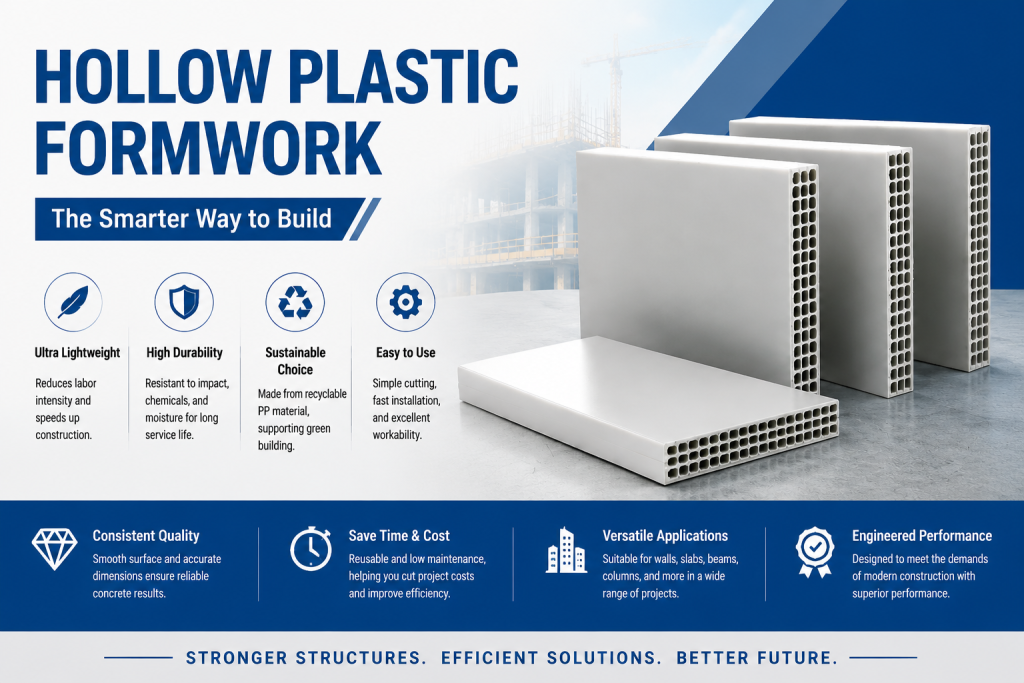
The construction industry is moving towards more efficient and eco-friendly solutions, and hollow plastic formwork has become a popular choice for modern builders. Lightweight, durable, and reusable, this innovative formwork system offers multiple advantages over traditional timber or metal alternatives.
Why Choose Hollow Plastic Formwork?
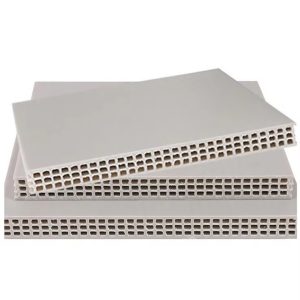
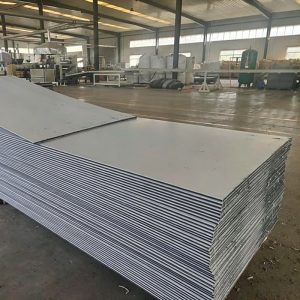
Hollow plastic formwork is designed with a hollow structure that reduces weight without sacrificing strength. This makes it easy to transport, assemble, and disassemble on-site, saving time and labor costs. Its modular panels ensure consistent dimensions and high-quality concrete finishes.
Applications of Hollow Plastic Formwork
This type of formwork is versatile and can be used in various construction projects, including:
- Residential buildings
- Commercial complexes
- Industrial facilities
- Infrastructure projects
The modular design allows it to adapt to straight, angled, or curved walls, making it suitable for complex architectural layouts.
Durability and Reusability
Made from high-quality plastic materials, hollow plastic formwork is resistant to cracking, bending, and chemical damage. It can be reused multiple times across different projects, reducing material costs and minimizing waste compared to traditional timber formwork.
Eco-Friendly Construction
Sustainability is a key advantage of hollow plastic formwork. Fully recyclable and reusable, it lowers the demand for timber and helps construction teams reduce waste. This makes it an environmentally responsible choice for builders looking to implement greener practices.
Finding Hollow Plastic Formwork Suppliers
Many manufacturers and suppliers specialize in hollow plastic formwork for different scales of construction projects. Choosing the right supplier involves evaluating product quality, customer support, and experience in delivering reliable formwork systems.
Conclusion
Hollow plastic formwork is transforming modern construction by combining efficiency, durability, and sustainability. Its lightweight design, adaptability, and reusable nature make it an ideal solution for contractors aiming to reduce costs, speed up construction, and achieve superior concrete finishes.