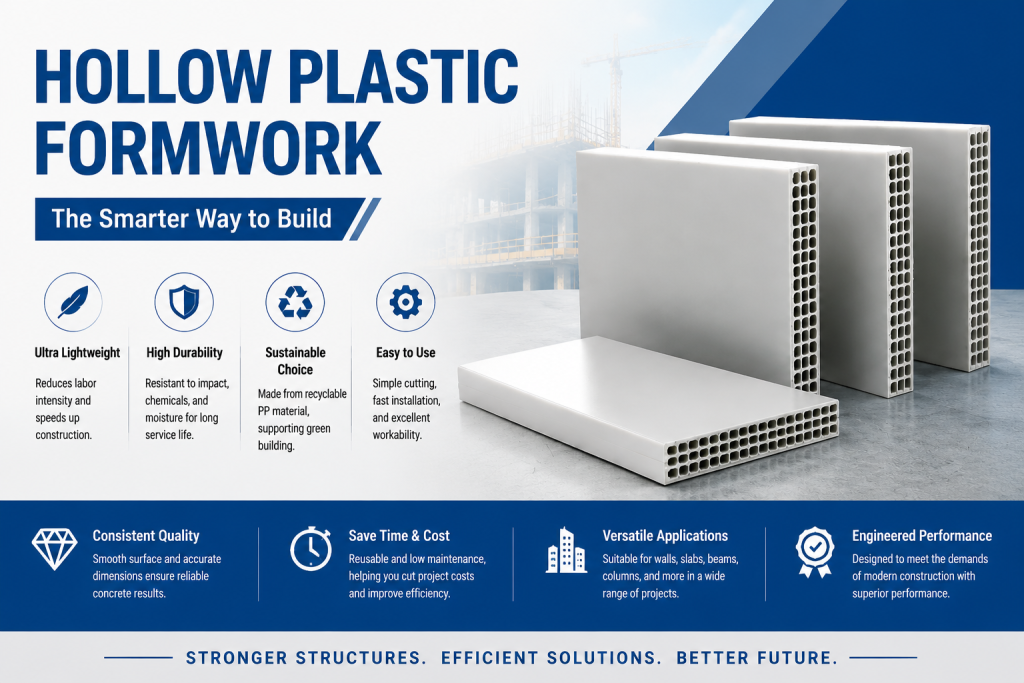
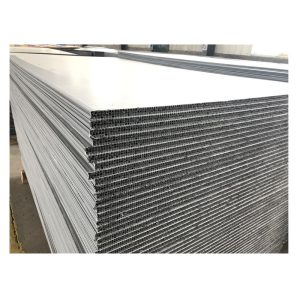
In the evolving world of construction, efficiency, sustainability, and precision are becoming increasingly critical. Hollow plastic formwork has emerged as a game-changer, offering innovative solutions to the challenges faced by builders and engineers worldwide. Unlike traditional wooden or metal formwork, hollow plastic systems combine durability with lightweight versatility, making them a preferred choice for modern construction projects.
Durability and Reusability
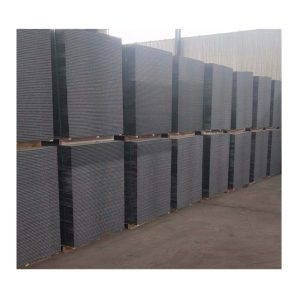
One of the key advantages of hollow plastic formwork is its exceptional durability. Manufactured from high-quality polypropylene or other industrial-grade plastics, these forms resist water, chemicals, and UV exposure. They can be reused multiple times without compromising structural integrity, significantly reducing material waste and overall project costs.
Lightweight and Easy to Handle
Traditional formwork can be heavy, cumbersome, and labor-intensive to install. Hollow plastic formwork, in contrast, is lightweight yet strong, allowing workers to handle and position panels with ease. This reduces labor fatigue, accelerates construction timelines, and enhances on-site safety.
Precision and Consistency
Hollow plastic formwork ensures a high degree of precision in concrete shaping. Its uniform structure allows for smooth, even surfaces, minimizing the need for additional finishing work. Architects and engineers appreciate the reliability it offers for creating intricate designs or repetitive structures, particularly in residential and commercial buildings.
Environmentally Friendly Solution
Sustainability is a pressing concern in today’s construction industry. Hollow plastic formwork contributes to eco-friendly building practices by reducing the need for timber and minimizing waste. Many plastic forms are recyclable, enabling a circular approach where materials can be repurposed at the end of their lifecycle.
Versatility in Applications
From walls and slabs to columns and beams, hollow plastic formwork can be adapted to a variety of construction applications. Its modular design allows for quick assembly and flexibility in accommodating different architectural requirements, making it suitable for both small-scale renovations and large-scale projects.
Conclusion
As construction demands evolve toward faster, safer, and more sustainable methods, hollow plastic formwork stands out as an innovative solution. Its combination of durability, precision, and environmental benefits makes it a smart choice for builders looking to enhance efficiency while reducing costs and ecological impact. Embracing hollow plastic formwork represents not just a technological advancement, but a step toward a greener and more efficient construction industry.