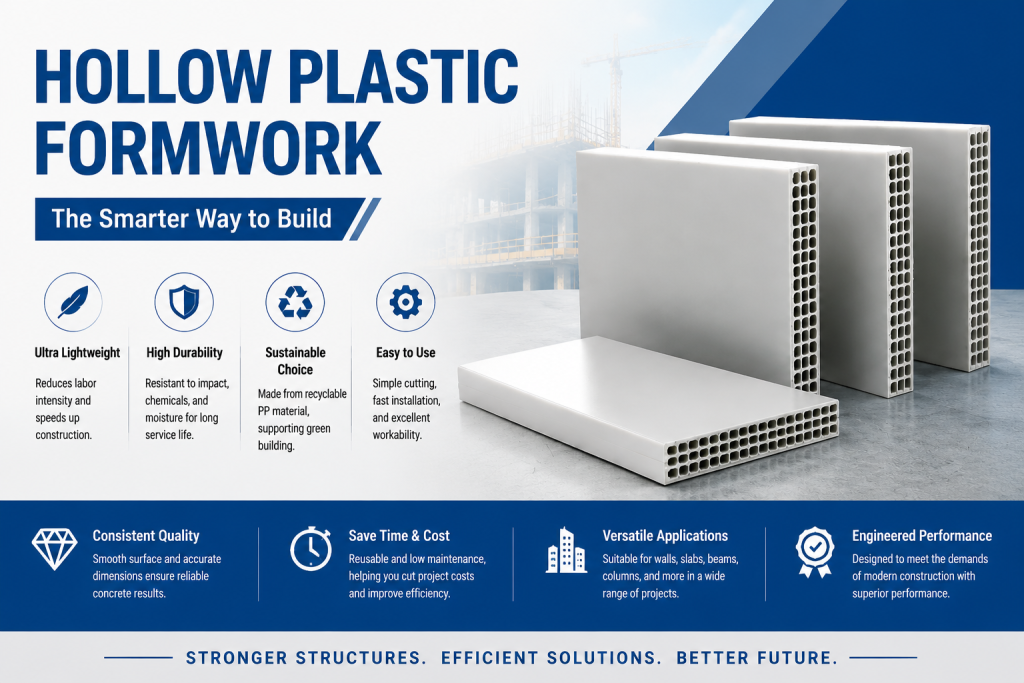
Hollow plastic formwork is gaining popularity in modern construction for its efficiency, durability, and sustainability. It offers a practical alternative to traditional timber and metal formwork systems, providing builders with lightweight, reusable, and eco-friendly solutions.
Key Advantages
- Lightweight and Easy to Handle: The hollow design reduces weight without sacrificing strength, making panels simple to transport and assemble.
- Durable and Reusable: Made from high-quality plastics, these formworks withstand multiple uses, resist cracking, and maintain their shape over time.
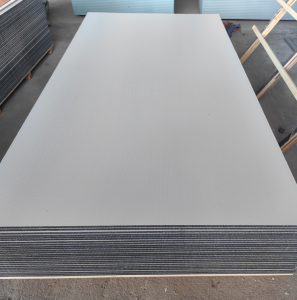
- High-Quality Concrete Finishes: Modular panels provide consistent wall and slab shapes, minimizing the need for additional finishing work.
- Flexible Applications: Suitable for residential, commercial, and industrial projects, including curved and complex structures.
- Eco-Friendly: Fully recyclable and reusable, hollow plastic formwork reduces timber consumption and construction waste.
Common Uses
Hollow plastic formwork is widely used for:
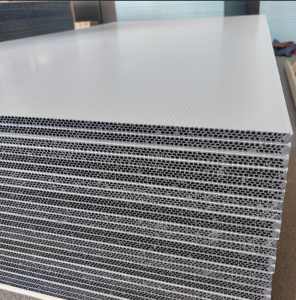
- Walls, slabs, and columns in buildings
- Infrastructure projects like bridges and tunnels
- Modular construction where repetitive forms are required
Choosing a Supplier
When sourcing hollow plastic formwork, it’s essential to select companies with proven durability, customization options, and reliable support services. High-quality suppliers ensure timely delivery and on-site technical assistance, enhancing construction efficiency.
Conclusion
Hollow plastic formwork is revolutionizing construction by combining efficiency, precision, and sustainability. Its lightweight, reusable, and versatile design allows builders to save time, reduce costs, and achieve superior concrete quality.